
Piercing Problems & Aftercare
We align new techniques and innovative Health & Safety process to ensure optimal healing. All that you need to know about how to look after your piercing.
Do…
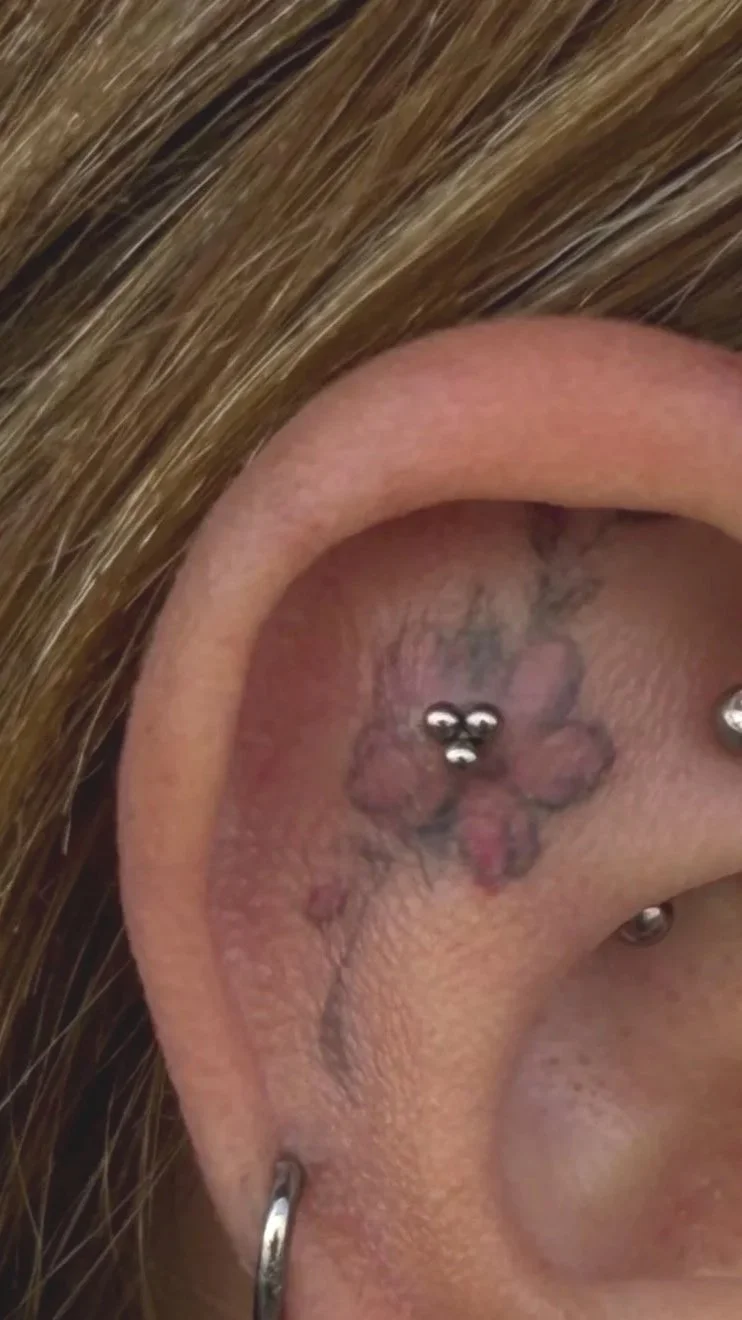
Clean 2 x a day
Air the piercing out
Use cotton pads / Gauze
Advised Saline solution
Avoid loose threading / body wash loofas
Rinse the area in shower
Get a travel pillow or blanket trick to help sleep
Don’t…
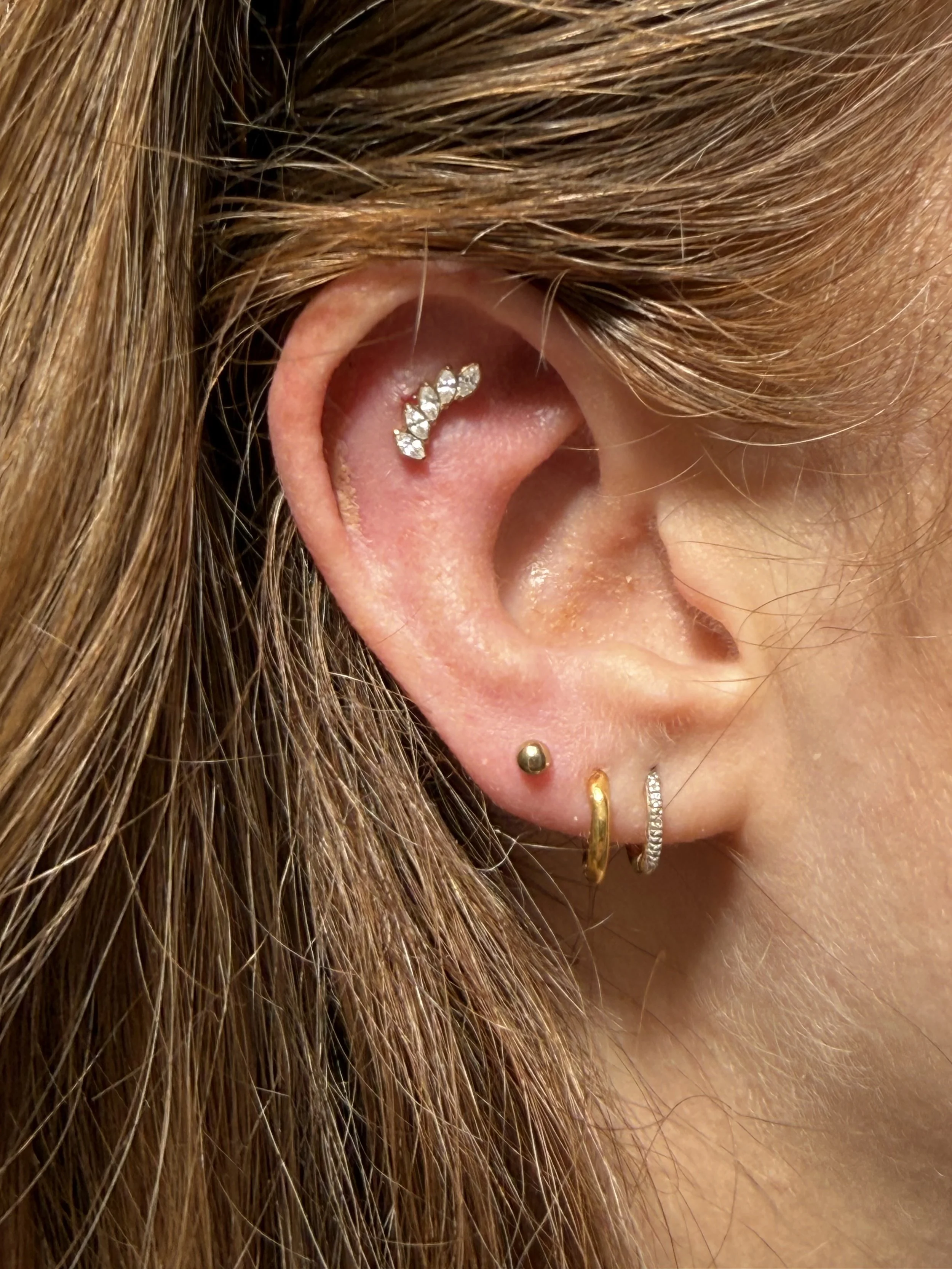
Twist/play/pull the piercing
Wear tight clothing / headbands / hats
Use cotton buds
Use unclean hands
Sleep on the piercing
Put oils, body\hair wash, or any other substance on the piercing area (unless advised by a professional).
Cleaning:
Always wash your hands before touching your piercing.
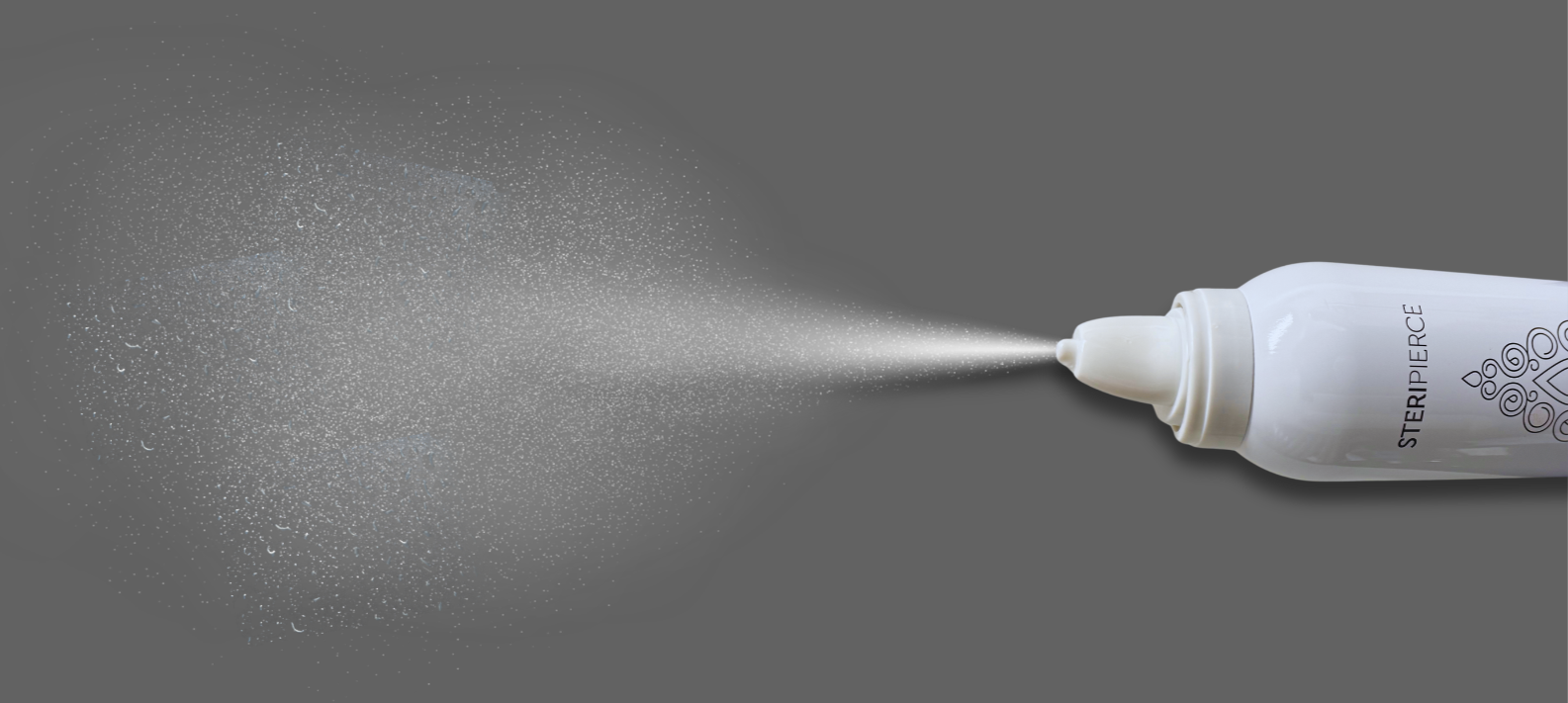
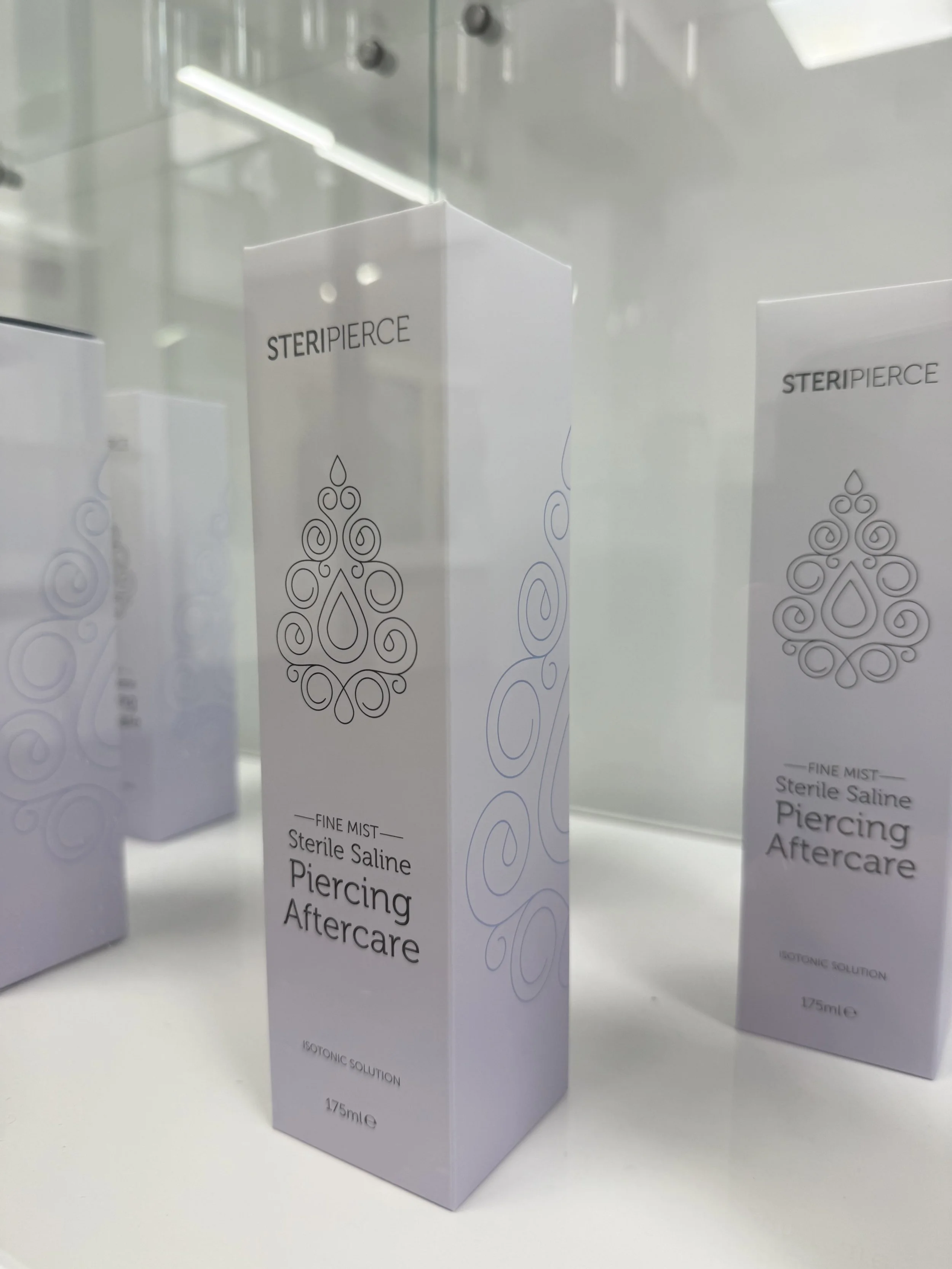
Only use SALINE SOLUTION to clean the surrounding area of the jewellery, and the entry and exit points. Remove any body fluids from the area and jewellery, but DO NOT turn or rotate. Lightly pat dry the area with cotton pads, gauze or fresh kitchen roll. Whenever your piercing gets wet, make sure to dry thoroughly after to avoid moisture storing.
For tongue and other oral piercings, gargle 2 to 3 times with boiled warm water twice a day. Also use an anti-bacterial mouth wash throughout the day to help reduce bacteria. Avoid all dairy and spice products and anything containing dairy or spice for at least 2 weeks to ensure minimal swelling. Ibuprofen may help with swelling under a doctors advice.
Some piercings have a specific set of aftercare which the piercer would have shown you after your piercing is complete. If you need a re-cap, find your booking conformation email and reply with your question. If you don't have a confirmation email, email us with your questions.
General advice:
Trauma is caused by pulling, catching, chaffing of clothes or sleeping on your piercing during the healing process. The best advice is to wear loose fitting clothes and use a piercing pillow/ travel pillow /blanket trick to help sleep in the early stages.
Try to avoid tight waist bands and heavy belts in the case of navel piercings and hair gel or spray in the case of ear or eyebrow piercings.
Do not apply make up to the surrounding area.
Bumps / Marks /Scars:
Best thing to do is to contact us. This is a normal part of the healing process and should not alarm you. Please send an image of your piercing through email and the best advice will be given based on what is shown.
Please get someone else to take the photo for you so we get a clearer image.
Swelling:
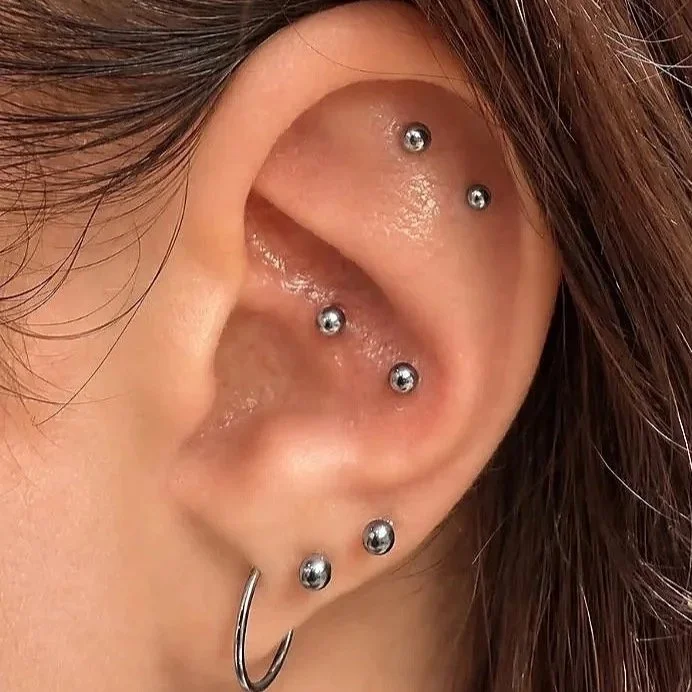
Most piercings will swell, and we always allow space on your jewellery to compensate for this. Occasionally, a piercing may swell more than usual and can be painful. If your piercing swells more than 2 - 3mm, or if there seems to be a possibility that your jewellery is too short to accommodate the swelling, please return so that we can fit longer jewellery and avoid any complications.
If it is beginning to embed into your skin, you must visit your piercer and if possible exchange it for a longer piece of jewellery. For tongue piercings, a long bar is always used for the initial piercing, this can be changed for a shorter one after approximately 2-4 weeks.
You may find it helpful to use icepacks or ice lollies (mouth piercings) to reduce the swelling.
Anti-inflammatory medication may be taken but only under advice from a medical professional.
Infections:
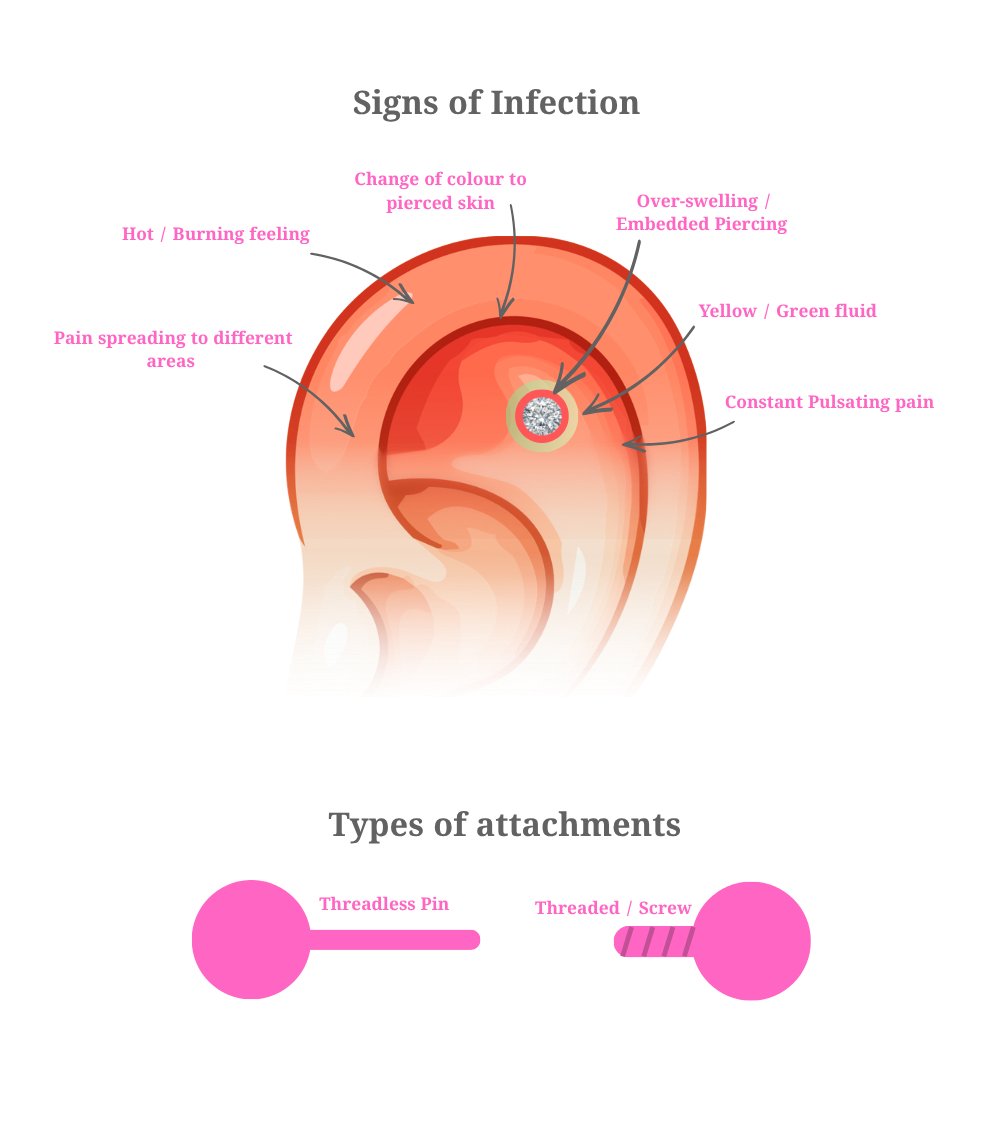
A piercing is a fresh wound, if kept clean and dry at all times, it will heal safely and completely. If however, it gets dirty or is not cleaned regularly it may become infected. The sign of infection is red/change of colour to the pierced skin area, over-swelling, consistent pulsating pain, a large amount of green or yellow puss and you may have a fever. If you are in any doubt or have any of these symptoms, contact your piercer to advise you on what treatment is suitable. Serious infections should be treated with antibiotics and you will be advised to seek medical advice.
Ball / Attachments:
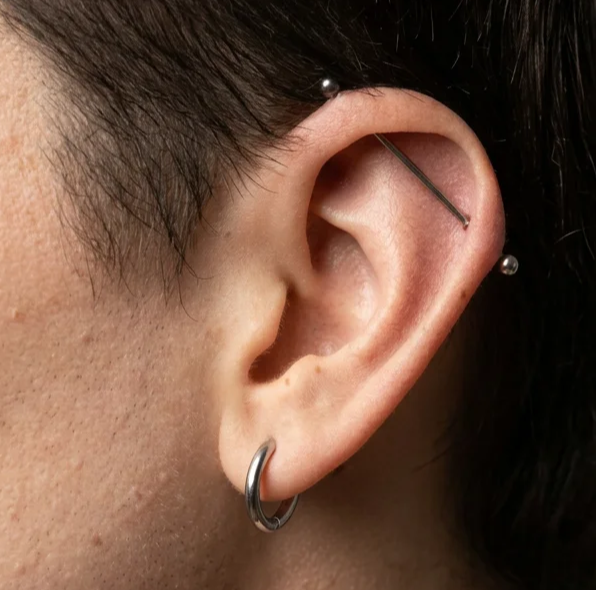
Every 2-3 days you should check the tightness of the attachment on your body jewellery.
They can become loose from rubbing against clothes, skin, etc. Make it part of your daily cleaning routine to just make sure the jewellery is secure.
Threaded jewellery are screwed on till tight.
Threadless (pin) are bent to fit into the bar and then squeezed together.
Not sure on what to do, book in for a change over on our system and we will help.
Migration / Rejection:
Some piercings can migrate to some degree. In extreme cases this can lead to jewellery 'growing out' of the body altogether. Some piercings, (eyebrow, navel, surface etc.) are more prone to migration than others. It is not dangerous or painful, but it may leave a small scar. If you notice any migration, visit your piercer as soon as possible for advice as it is usually recommended to remove the jewellery before it has a chance to fully reject.
Puss / Dried Crust:
Some bodily fluids can pass through the piercing area and push itself out of the piercing exit area. This is very normal and common, it's actually a sign that your body is doing exactly what it needs to do to heal the piercing. In most cases, this will happen for the first couple months as the piercing channel (hole) heals and stop once the body is healed. This fluid can look slightly yellow, clear or white and can become crust, when dry, on the piercing jewellery and skin around. To remove, use your saline solution to soak the area, or when in the shower place the piercing area in the fresh water, and once the fluid comes away or crust softens leading it to fall off, dry the area with cotton pad or gauze.
Please note that it is common for navel and nipple piercings to puss for over a year. This is nothing to worry about but should be removed as soon as possible. If the fluid or crust is being stubborn, or you're worried on removing it, book in with us for a check-up and we will help you.